Three questions for every fish
Before any fish goes in the bag, it's worth knowing three things about it. What water does it want, in temperature and hardness? How big does it get, not in the shop but as an adult? And does it need to live in a group, or on its own? Those three answers prevent most mismatches. Ask us about any fish in the shop or on WhatsApp.
How many fish
The old rule of a centimetre of fish per litre is rough, and it treats a slim tetra and a chunky goldfish as the same thing. It's better to think about waste and space. A well-filtered, planted 60 litre tank comfortably holds a school of small tetras, a group of corydoras and one centrepiece fish. The same tank holds one goldfish. Start small, add a few fish at a time, and let the filter catch up between additions. A lightly stocked tank is easier to look after.
Schooling fish need a school
Tetras, rasboras, danios, barbs and corydoras live in groups in the wild and feel safe in a group in a tank. Six is the minimum; eight or ten of one species looks far better than four each of three. In a proper school they colour up and swim out in the open. In ones and twos they hide, and some of them get nippy out of stress.
Temperaments that mix
- Peaceful community: tetras, rasboras, guppies, platies, mollies, corydoras, small gouramis, bristlenose plecos, kuhli loaches, rainbowfish. These all go together with a little thought about temperature.
- A little boisterous: tiger barbs, serpae tetras and some danios can nip at long fins. Keep them in larger groups, which spreads the attention, and away from bettas, angelfish and fancy guppies.
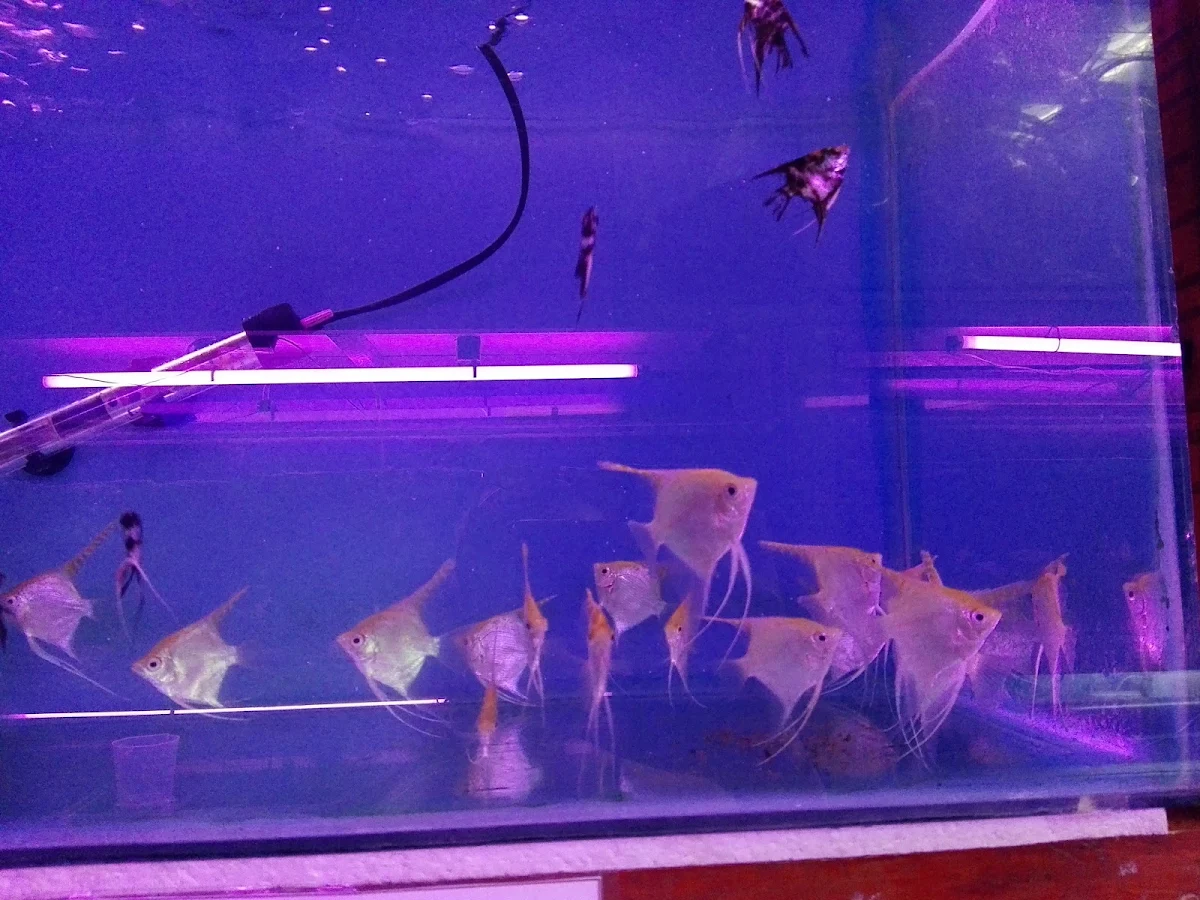
- Cichlids: angelfish, rams and kribensis fit a larger community with care. The African rift lake cichlids want hard water and their own kind, in numbers, and are best kept as a cichlid tank rather than mixed in.
- Bettas: one male per tank, no other bettas, and no long-finned or nippy tankmates. A male betta with a group of corydoras and some small rasboras works well in a small tank.
Top, middle and bottom
Fish occupy different levels, and a tank looks fuller and calmer when they're spread out. Hatchetfish and guppies stay near the surface. Tetras, rasboras and rainbowfish hold the middle. Corydoras, loaches and plecos work the bottom. Choosing one group from each level gives every fish its own space.
Fish that outgrow tanks
A few popular fish are sold small and grow large. The common pleco reaches forty centimetres. Oscars, pacu, bala sharks, silver dollars and iridescent sharks all need tanks measured in hundreds of litres. Goldfish grow to hand size and beyond. Plan for their adult size from the start. If you're not sure how big something gets, ask us.
Three example communities
60 litres
Ten neon or ember tetras, six pygmy or panda corydoras, and a single honey gourami or a pair of rams as the centrepiece. Plants, a piece of wood, and the tank is full without being crowded.
120 litres
A school of twelve rummy-nose or cardinal tetras, eight corydoras, six harlequin rasboras, a bristlenose pleco, and a pair of angelfish or a group of platies as the feature. Room for a proper planted layout.
200 litres and up
Two schools of twelve, a group of rainbowfish, eight to ten corydoras, a couple of bristlenose, and a centrepiece such as a pair of angelfish, a group of gouramis, or a small group of rams. Or, in hard water, a dedicated Malawi cichlid tank with fifteen to twenty mbuna and plenty of rock.
Adding new fish
Float the sealed bag in the tank for fifteen minutes so the temperature matches, then open it and add a little tank water every few minutes for another fifteen before netting the fish across. Leave the bag water out of the tank. Keep the lights low for the first evening and skip that day's feed. Shrimp and delicate fish appreciate a slower drip over an hour. If you have a spare small tank, a couple of weeks of quarantine for new arrivals protects everything you already have, though we understand not everyone has the space.
Send us your tank size and what's already in it, and we'll suggest what would settle in alongside them from this week's stock.
Have a shortlist in mind? Send it over and we'll check who gets along.
WhatsApp Sam's