First, test the water
Before treating anything, test for ammonia, nitrite and nitrate and check the temperature. Nine times out of ten, a fish that looks unwell is telling you something about the water, and a water change is the treatment. Medication works best in clean water. If you can't test, a 30 percent water change with dechlorinator is a safe first move while you find out more.
Cloudy water
Milky white in a new tank is a bacterial bloom. It looks alarming, but it's harmless. Leave it alone, keep up the water changes, and it clears within a week or two as the tank settles.
Milky white in an older tank usually means more food going in than the tank can use. Feed less, siphon the gravel, change some water.
Green water is free-floating algae, and it's a light problem. Cut the lights to six hours, keep the tank out of direct sun, and if it persists, three days of complete darkness with the tank covered will clear it. A UV steriliser in the filter line stops it coming back.
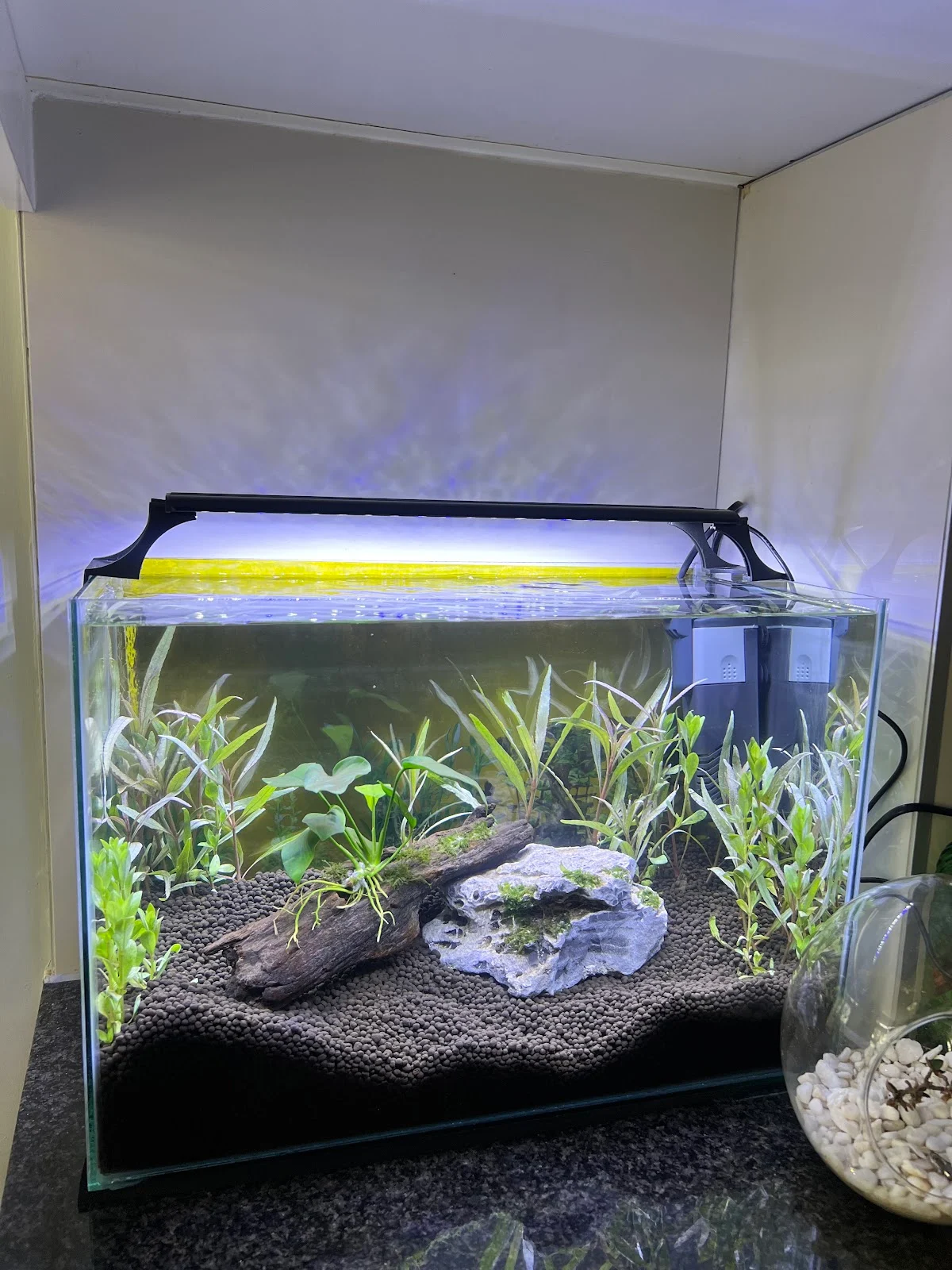
Brown or yellow water is tannin from driftwood. It's harmless, and many fish prefer it. Water changes lighten it over time; a bag of activated carbon in the filter removes it quickly.
Algae on the glass, rocks and plants
Every tank has some, and a little is healthy. Brown algae in the first months clears by itself. Green spots on the glass come off with a scraper on water-change day. Hair and thread algae mean too much light for the plants to keep up with: shorten the light period, add fast-growing plants, and keep up the water changes. Black brush algae on leaf edges and wood points to unstable CO2 or low flow; improving circulation and trimming affected leaves is the usual answer. Algae eaters help with the everyday tidying, but they work alongside a good routine rather than instead of one.
Fish at the surface, breathing fast
This needs attention today. It means one of three things: not enough oxygen, an ammonia or nitrite spike, or water that has got too warm. Test the water. Change 30 percent with temperature-matched, dechlorinated water. Add an air stone or point the filter outlet at the surface to break it up. If the tank is over 28 degrees, cool it down. Then work out what caused it, which is usually overfeeding, too many fish for the filter, or a filter that stopped.
White spot
Small white dots like grains of salt on the fins and body, often with the fish rubbing against things. It's a parasite, it spreads through the water, and it's very treatable if you start early. Raise the temperature slowly to 28 to 30 degrees, which speeds up the parasite's life cycle so the medication can reach it, and treat the whole tank with a white spot medication for the full course on the bottle, even after the spots disappear. Remove carbon from the filter while treating. Most cases are cleared in a week to ten days.
Ragged fins, fluffy patches, red streaks
Fin rot and fungus almost always follow poor water or a bully in the tank. Fix the water first, with a change and a test, and look for who is doing the nipping. If it doesn't improve within a few days, a broad antibacterial treatment from the shop takes care of it. Bring a photo and we'll tell you which one.
Fish hiding, or not eating
New fish hide for a few days; that's normal. A fish that has stopped coming out or stopped eating after settling in is usually being bullied, is unwell, or is reacting to the water. Watch the tank for ten minutes at feeding time and you'll often see who's chasing whom. More plants and hiding places calm a great many tanks, and rehoming one troublemaker calms most of the rest.
Losses after adding new fish
If you lose fish in the first days after new arrivals, the usual causes are a tank that was not fully cycled for the extra load, acclimation that was too quick, or something the new fish brought with them. Test the water and change some. Watch the survivors for white spot and other signs. In future, add fewer fish at a time, float the bag for longer, and if you have a spare tank, quarantine new arrivals for a couple of weeks. And tell us. If fish from our tanks haven't done well, we want to know, and we'll help put it right.
Load shedding and power cuts
Cape Town tanks live with load shedding, and a well-kept tank copes with a few hours easily. The bacteria in the filter survive as long as the media stays wet. The fish are fine for several hours without the filter running. Keep the lid on to hold the heat in winter. Skip feeding until the power is back. For cuts longer than a few hours, a battery air pump keeps the water moving and oxygenated, and it costs very little. In winter, an inverter or a UPS that can run the heater is worth it for a tropical tank. When the power returns, check the filter has restarted and primed, and test for ammonia the next day.
When to ask us
Any time. A photo of the tank, a close-up of the fish if it's about a fish, and your test readings if you have them. The more you send, the better the answer.
A photo on WhatsApp is the quickest way to get a second opinion.
WhatsApp Sam's