Why bother with real plants
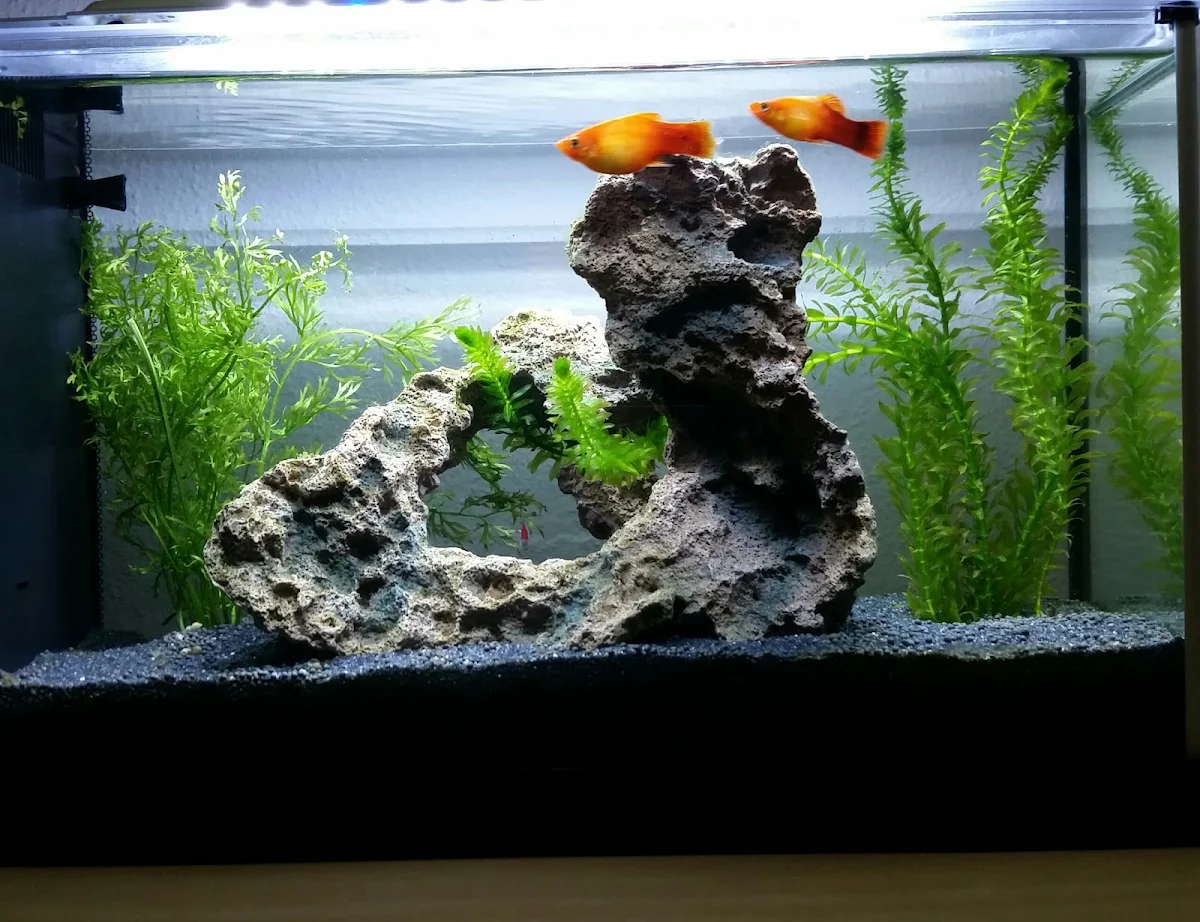
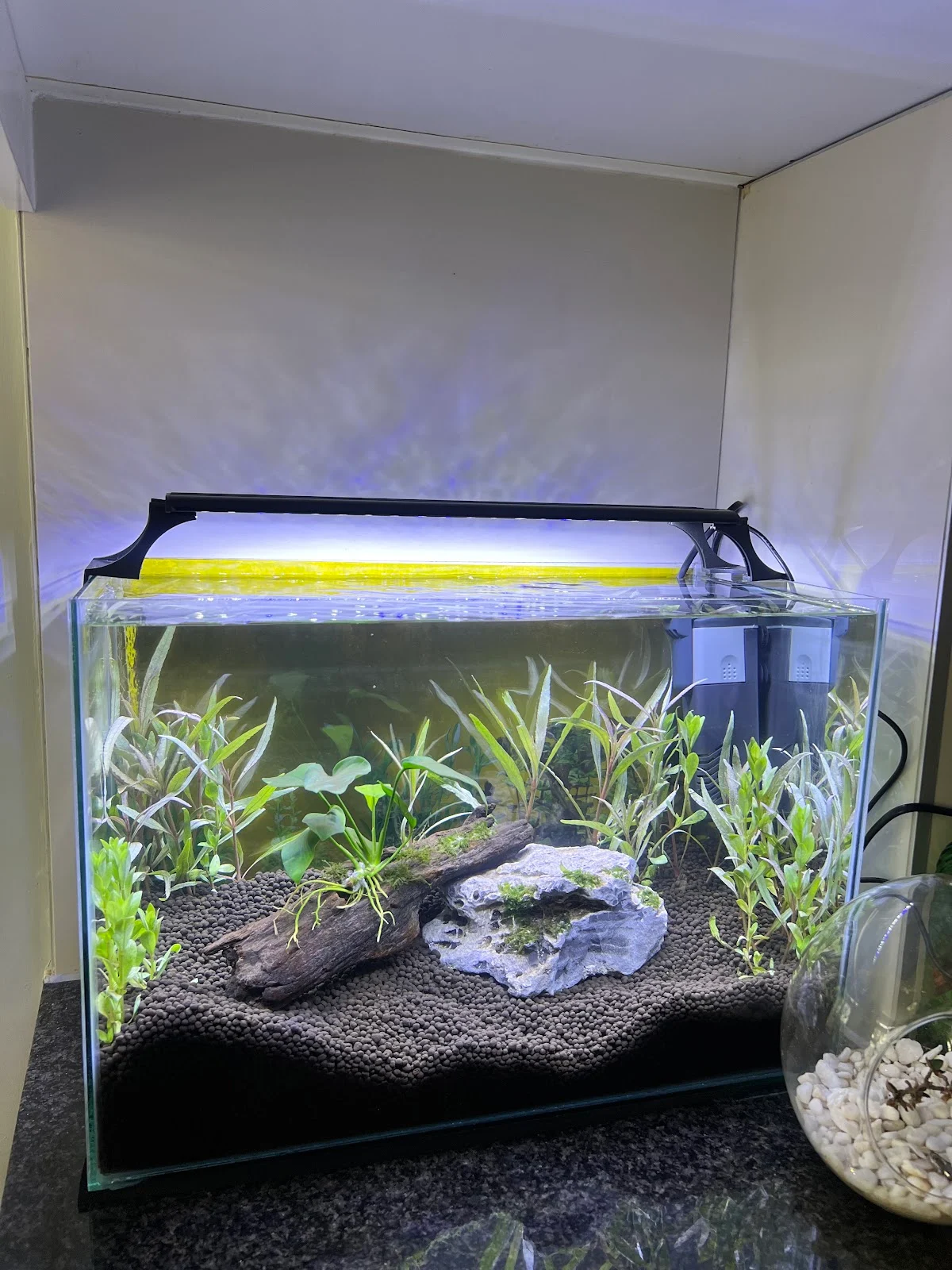
Live plants take up nitrate, give shy fish somewhere to hide, and turn a glass box into something that looks alive. A planted tank is also more stable: the plants compete with algae for light and nutrients, and they carry on quietly cleaning the water between changes.
Plants that grow for anyone
- Anubias. Slow, tough, and happy in low light. Tie it to wood or rock and keep the rhizome, the thick creeping stem, above the substrate.
- Java fern. Same treatment as Anubias, and just as forgiving. Grows new plantlets on old leaves.
- Cryptocoryne. Rooted in the substrate, comes in browns and greens. It often drops its leaves after planting, which is normal; it grows back within weeks.
- Amazon sword. A big rooted plant for the back of a tank. Hungry, so give it a root tab.
- Vallisneria. Tall grass-like leaves that spread by runners. Good for the back and sides.
- Hornwort and Elodea. Fast growers that can float or be planted. Excellent for soaking up nitrate in a new tank.
- Java moss. Attach it to anything. Shrimp and fry love it.
- Floating plants. Salvinia, frogbit and red root floaters shade the tank, and their roots are a favourite hiding place.
Every one of these grows under a standard aquarium LED, without CO2, and without a special substrate. Start here.
Light
Six to eight hours a day is plenty, and a cheap plug-in timer is the best money you'll spend on the tank, because consistency matters more than brightness. More light doesn't mean more growth unless the plants have the nutrients and carbon to use it; it usually means more algae. If the tank sits near a window, that counts as light too.
Substrate and feeding
Rooted plants such as swords, crypts and Vallisneria feed through their roots. A planted substrate under the gravel, or root tabs pushed in next to them every few months, keeps them fed. Plants that grow on wood and rock, and floating plants, feed from the water. A liquid fertiliser once a week after the water change covers them. In a tank with plenty of fish, the fish waste supplies a good part of what the plants need.
Do you need CO2
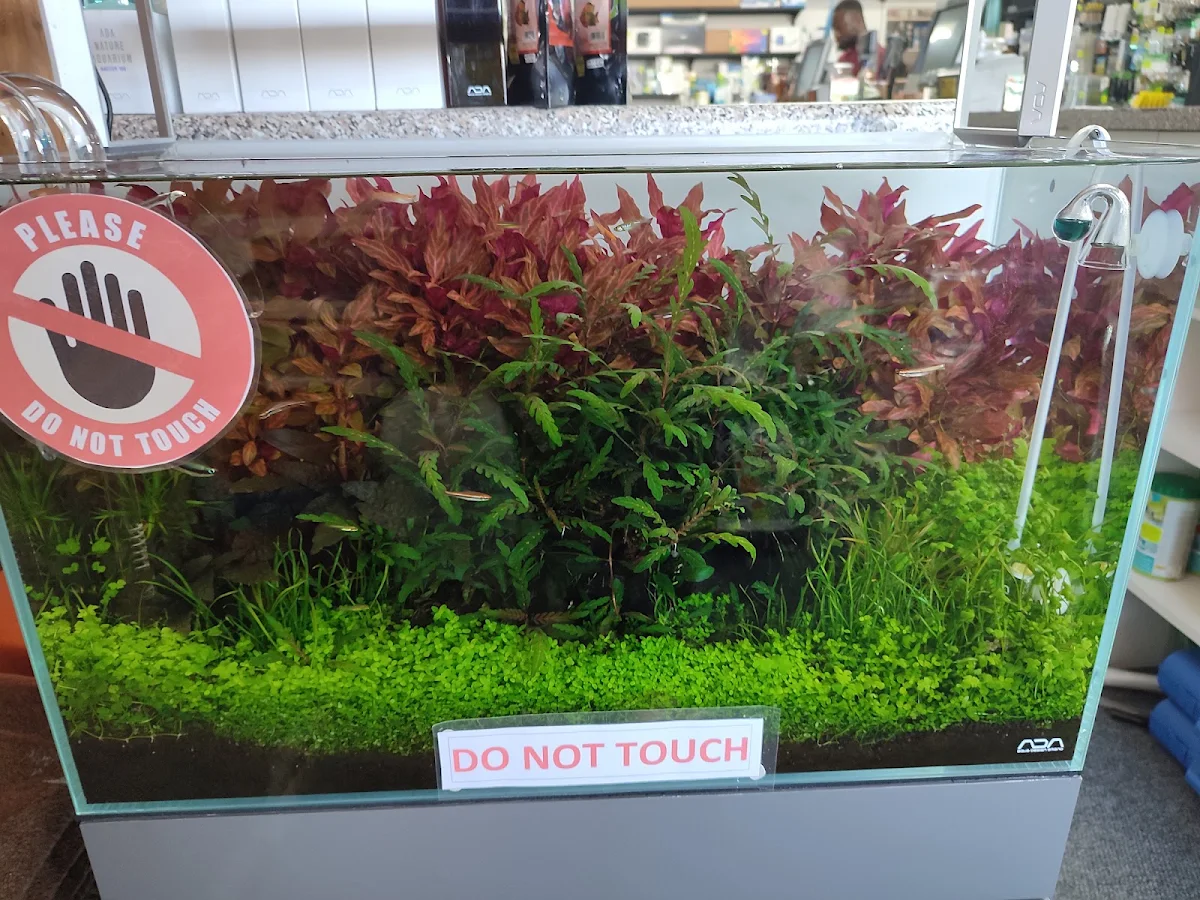
For everything above, no. Carbon dioxide injection is what turns a planted tank into a lush, fast-growing one, and it's what carpeting plants, red stem plants and the demanding species need. Get the easy plants established first, then ask us about a CO2 setup if you want to go further.
Planting tips
- Take plants out of their pots and pull away the rock wool before planting. Rinse the roots.
- Bury the roots and leave rhizomes above the substrate. Anubias and Java fern grow best tied or glued to wood or rock.
- Plant stems in small groups with a little space between each stem.
- Trim regularly. Cuttings from stem plants can be replanted, so one bunch becomes many.
- Some melting in the first fortnight is normal, especially with crypts. Leave the roots in and wait.
Keeping algae in check
Algae is a balance problem: more light than the plants can use, or nutrients with nothing to take them up. Shorter light hours, more plants, and the weekly water change fix most of it. Brown algae in a new tank clears on its own. Green spots on the glass come off with a scraper. For hair algae, cut the light back and let the plants catch up. A few Amano shrimp, otocinclus or a bristlenose pleco help keep algae down.
Plants and the fish that eat them
Goldfish, silver dollars and the larger cichlids will eat or uproot most plants. Anubias and Java fern usually survive them, being tough and tied down rather than rooted. For a goldfish tank, those two plus some floating plants give you greenery that lasts.
Tell us about your light and your tank and we'll point you to what will thrive under it.
Send us a photo of your tank and we'll suggest a few plants to start with from this week's stock.
WhatsApp Sam's